Summary
Employee benefits fairs can be a helpful way to engage employees and help them better understand their benefits. One common challenge is encouraging meaningful participation both in-person and virtually. This article shares ideas to help you make the most of your next benefits fair, whether in-person or virtual.
Key takeaways:
- Solicit feedback before and after your benefits fair to understand what employees want and how to improve.
- Incorporate activities like health screenings to draw employees in and offer giveaways to motivate employees to learn about their benefits.
- Brand your benefits fair and communicate across multiple channels, early and often, to drive participation.
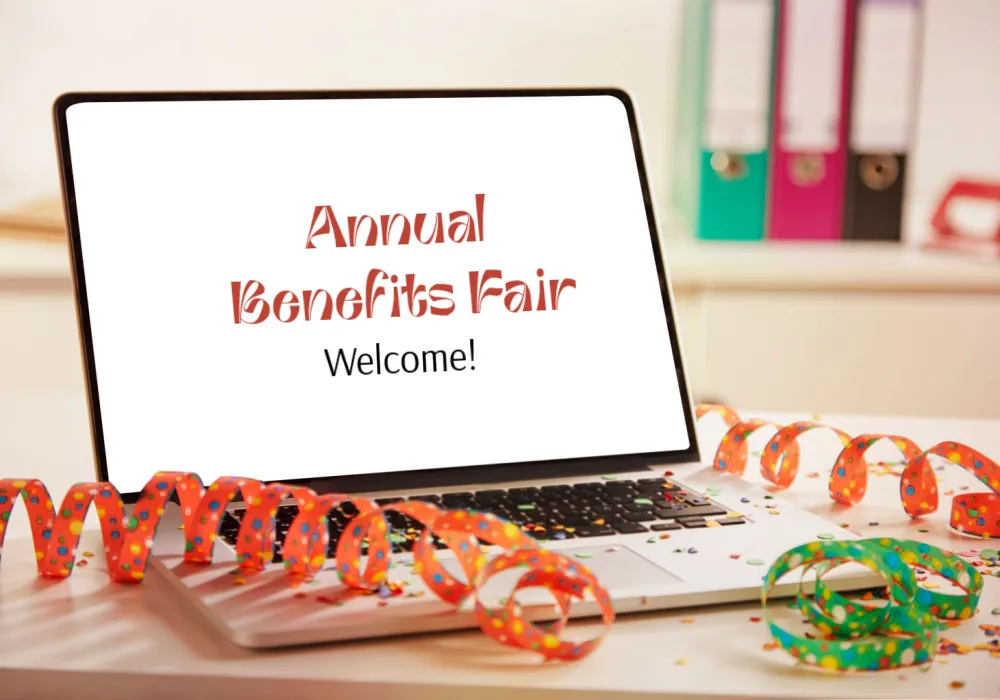
An employee benefits fair, virtual or in-person, can be a valuable opportunity to engage and educate your employees on their benefits. It’s a fun way for you to get employees curious and thinking about their total wellbeing, especially those who may not be as engaged outside of open enrollment season. Consider these tips as you plan your next benefits fair.
1. Solicit feedback.
Get direct feedback from your employees both before and after your benefits fair. By launching a quick survey, you can understand what they’d like to get out of the event, the types of vendors they’d like to see and additional ways you could make it more helpful to them. Post-event, you can ask participants for feedback directly through email, focus groups or using another survey.
Help Show the Fair Was Worth It
Engagement is important, and leadership may want to understand the impact. Consider tracking attendance (registered vs. actual), enrollment activity compared to years without a fair, vendor session views and post-event survey scores. If you use a benefits platform with analytics, pull a report on how many people who attended the fair went on to log in and make changes during open enrollment. Even a simple before/after enrollment comparison can help support the case for next year's budget.
What to Actually Track
Beyond attendance, look at: time spent per vendor booth or session (virtual platforms may report this), number of questions asked in chat or Q&A, click-through rate on pre-event communications, and repeat engagement (did people come back for a second session or log in again after the event?). These numbers can offer a fuller view of how employees engaged once they showed up.
2. Get your timing and logistics right.
Proper planning is key when it comes to events. Choose a date that won’t compete with other important meetings and try to avoid Mondays and Fridays (and holidays, of course) when employees may be taking long weekends. Finally, consider scheduling your benefits fair either right before or toward the beginning of your open enrollment period so employees have time to ask questions and consider their options.
When it comes to logistics, it’s important to ask questions like, “What’s my budget? Are we holding it in person, virtual or a hybrid of both?” If in person, everything from floor plan to traffic flow and vendor information will help you determine setup needs. If virtual or a hybrid, there are technical aspects to consider.
Making Virtual Work
A virtual benefits fair benefits from its own playbook. Consider a platform that supports live chat, video booths and downloadable resources so employees can self-serve at their own pace. Set a clear start and end time, and consider keeping the platform open for 24–48 hours afterward so people in different shifts or time zones can still explore. Send a calendar invite with a direct login link, not just an email; fewer clicks may help support turnout.
Getting Hybrid Right
Hybrid events aren't just an in-person fair with a camera pointed at it. Design two experiences that complement each other: give in-person attendees hands-on activities (screenings, giveaways, face time with vendors) and give remote attendees interactive tools, like on-demand video Q&As or live chat with a relevant licensed professional. Make sure vendors know which audience they're speaking to at any given moment so remote employees feel included.
3. Build your team.
Benefits professionals don’t have to operate in a silo. Ask for help, especially for an event like an employee benefits fair. It’s a great opportunity to pull together a planning committee to assign specific tasks and help make the event smooth and positive for everyone.
Bonus Tip: Vendors make great additions to your benefits fair team. (See the next tip!)
4. Diversify your vendors.
Consider including representatives from all the vendors across your benefits program. This can help draw in a wide range of employees who may be interested in different benefit options. With a virtual or hybrid employee benefits fair, vendors that want to participate in online sessions can share helpful information on their products. If the vendor will allow it, be sure to record these sessions so employees can access them on demand if they miss the live session or want a quick refresh.
5. Incorporate activities like health screenings.
In-person benefit fairs are the perfect opportunity to offer health screenings as an option for employees. Consider incorporating onsite skin cancer checks and/or glucose/cholesterol blood tests as well as flu shots, depending on the time of year.
Bonus Tip: Screenings can take extra time, so allow participants to preregister for a specific time slot and send them a personalized reminder message the day before your event.
6. Brand your employee benefits fair and communicate.
Bring your benefits fair to life with creative branding. A recognizable benefits brand can help make messages more attractive, engaging and easier to act on. Then, broadcast your event through a variety of channels. Communication, early and often, is important to helping employees feel informed and valued. Plus, the purpose of a benefits fair is to encourage engagement and provide multiple opportunities for benefits education whether in-person or virtually. Using the right channels and cadence of communication can help support attendance and participation.
Meet Employees Where They Are
A one-size-fits-all benefits fair may not resonate with everyone. Segment your communications and content by life stage or role. A new parent, someone nearing retirement and a recent hire may care about different things. Personalized email invites ("Three sessions to consider based on your benefits") or dedicated tracks at the fair itself (family planning, financial wellness, retirement) can help increase relevance and turnout.
Take the Guesswork Out of Choosing
Many employees stick with the same plan year after year because comparing options can feel overwhelming. Offer a decision-support tool at your fair—whether that's a guided questionnaire, a cost calculator or one-on-one time with a relevant licensed professional—so employees can leave with guidance to consider, not just more information to sort through on their own.
7. Offer giveaways to draw a crowd.
Some employees may appreciate an extra nudge to motivate them to learn about their benefits. One way to do that is to offer giveaways. Vendors may incorporate fun items and freebies, but you can add to the incentive with items like cookbooks, yoga mats and gift cards for local or online wellness stores. Another option is to add a grand prize, such as round-trip airline tickets, if consistent with company policies and applicable rules.
Keep the Momentum Going
A benefits fair can be more effective when it is treated as part of an ongoing engagement strategy rather than a single annual event. Use insights from your fair's feedback and engagement metrics to plan smaller check-ins throughout the year, such as a spring financial wellness session, a summer mental health webinar or a fall open enrollment refresher. This can help keep benefits top of mind and support engagement leading into your next fair.
A successful benefits fair does more than fill a room; it helps your employees feel informed, valued and confident about the choices that shape their well-being. Each of these tips works toward the same goal: meaningful engagement that supports your people well beyond a single event.
Ready to extend that engagement across your entire open enrollment season?
Our Open Enrollment Planning Toolkit brings together everything you need—a sample season timeline, guidance on seven communication channels, tips for customizing your messaging and ideas for setting meaningful engagement goals—so we can help you plan with confidence and support your employees every step of the way.