Plan Year 2026: Integrated Decision Support Adds Value Across the Complete Benefits Picture

Summary
Benefitfocus’ integrated Decision Support helps employees connect and optimize their benefits enrollment and savings decisions. For the 2026 plan year, users were more likely to enroll in voluntary benefits, choose HDHPs and contribute to HSAs. This article highlights the impact of a guided benefits enrollment experience, such as:
- Improving the employer’s benefits offering.
- Enhancing the value of benefits across health and financial wellbeing.
- Strengthening employees’ understanding of consumer-driven health care.
Benefitfocus understands that employees have a finite budget for where their hard-earned paychecks go – and both their health and financial goals can impact their annual benefits elections. We also know that when employees make decisions about their health and financial benefits separately, it opens the door to the potential of being poorly protected when it comes to their health and financial security.
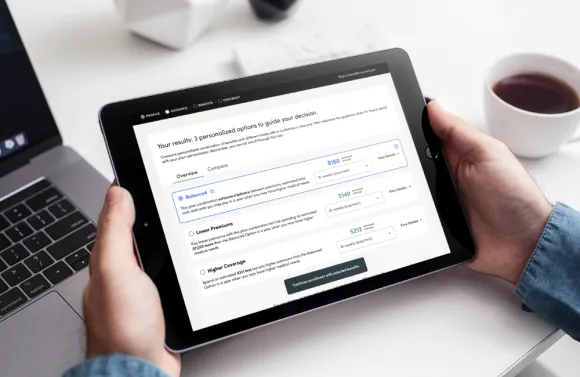
That’s why personalized Decision Support is seamlessly integrated with Benefitplace, our enrollment platform. The experience provides data-driven guidance across health care and savings choices to help employees connect and optimize their benefits enrollment and savings decisions.
Providing Benefits Confidence in 2026
We looked at data from customers using our enrollment platform for the plan year beginning January 1, 20261. It reveals that 44% of the employees who started Decision Support completed the workflow and selected a combination of personalized benefits options. As a result, these employees were making benefits selections that are intended to promote improved health and financial wellness outcomes.
Here are some of the results that were realized after completing the Decision Support workflow:
- Over half (56% and 55%) elected critical illness insurance* and accident insurance, compared to 37% and 36% of employees who didn’t use Decision Support. By enrolling in these types of voluntary benefit offerings, employees are prepared to help minimize the financial impact of specifically covered events.
- Over two-thirds (67 percent) of those electing a medical plan enrolled in a high-deductible health plan (HDHP), compared with a 55 percent enrollment rate among employees who didn’t use Decision Support. This suggests that using Decision Support helps employees see the potential value afforded by HDHPs and associated health savings accounts (HSAs).
- 64 percent enrolled in a Health Savings Account (HSA) when selecting a HDHP, compared to 42 percent for those that didn't use Decision Support. Additionally, the number of employees who contributed to their HSAs was 8% higher for those that used Decision Support.
*Critical Illness may be referred to as “Specified Disease” in some states.
What Do These Insights Mean for Employers?
A guided benefits enrollment experience has the potential to improve an employer’s overall benefits program in three key ways.
Improves the employer’s benefits offering.
Employees may perceive benefits as complicated and may struggle to understand, select and use their benefits optimally. Voya consumer research reveals that employees consider employer and insurance provider online/digital tools (e.g., employee benefits enrollment portal) most important to make decisions about employee benefits2. It stands to reason that anything that simplifies the benefits experience for the employee has the potential to increase engagement with their benefits, and this is likely to reflect positively on their employer.
Improves the value of benefits across health and financial wellbeing.
It's not a stretch to suggest that employees who are better prepared financially may be less likely to be distracted by personal financial issues in the workplace – and they may appreciate their employer for being the source of this needed protection. And when a guided benefits enrollment experience can connect-the-benefit-dots for them, all the better.
Voluntary benefit offerings can play an essential role when it comes to optimizing benefits across the health-savings spectrum. Employees enrolled in such coverages as critical illness*, accident and/or hospital indemnity insurance, for example, may be better prepared financially to minimize the financial impact of a covered illness, accident or hospitalization. In fact, Voya research found that 85 percent of employees agree they take advantage of voluntary benefits offered at work and 83 percent feel more financially confident as a result of being enrolled in them2.
*Critical Illness may be referred to as Specified Disease in some states.
Improves employees' understanding of consumer-driven health care.
A Voya Financial Consumer Insights & Research survey indicated an opportunity to educate working Americans on the advantages of HSAs: only 3 percent of the working Americans surveyed understood the full benefits of HSAs by correctly selecting all options (compared to 2 percent in 2020). Furthermore, knowledge levels are (still) low and only slightly increased among those who own an HSA (5 percent), and those who have an account balance of $5k or more (8 percent)3.
HSAs can help contribute to employee financial wellbeing since they give access to triple tax savings: contributions are pre-tax when made via payroll deduction, earnings are tax-free and withdrawals for qualified medical expenses are tax-free. High-deductible health plans with an associated HSA may not be appropriate for every employee, of course, but they may be a good option for many. An employer whose workforce is well-informed of their health care and savings options may be more likely to be engaged in their benefits management, and therefore have the potential to experience the optimal health and financial outcomes that can help strengthen individuals and the organization.
The Benefitfocus Decision Support Solution Engages, Optimizes and Inspires
What makes our decision support solution unique is that it offers unbiased guidance across a robust set of benefits: not just major medical plans and health care savings/spending accounts, but also dental, vision and voluntary benefits including critical illness, accident and hospital indemnity insurance.
By estimating employees’ household health care needs, Decision Support generates scenarios based on the employee’s risk profile and proposes appropriate benefit options structured to minimize out-of-pocket costs in an average year and mitigate risk of large out-of-pocket costs in a year where utilization is higher than expected.
The goal is to help employees:
- Avoid decision fatigue and guesswork
- Balance health care costs with expected needs
- Prepare for their financial future
And employers? They’re better able to realize the full value of the investment they’re making in their people.
Learn more about the Benefitfocus personalized Decision Support solution.